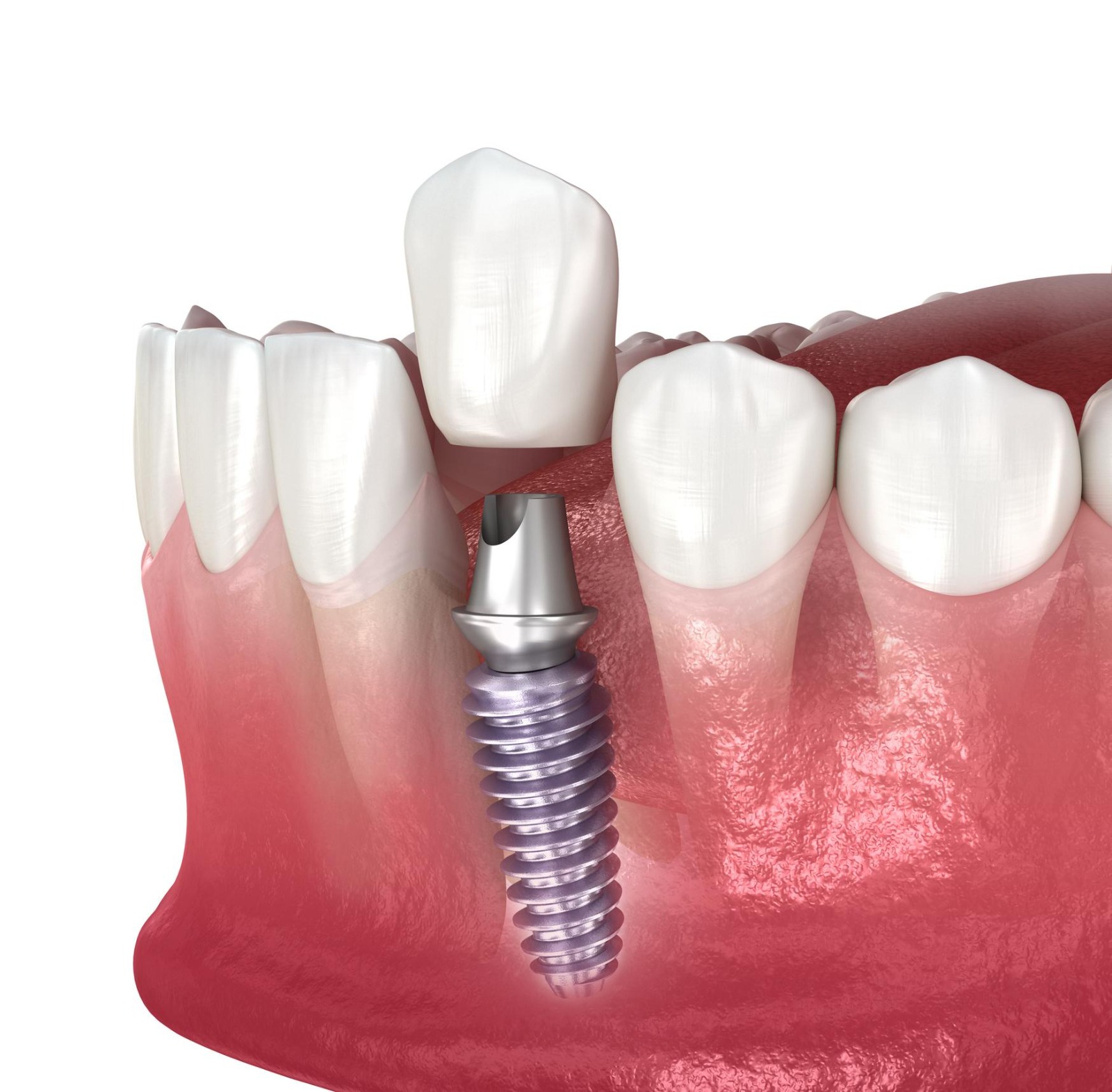
01
One Missing Tooth
Replace a missing tooth with an implant-supported crown, without needing to prepare healthy neighbouring teeth as with some conventional bridges.
Archives
Categories
Missing one tooth, several teeth or struggling with loose dentures? Dental implants can provide a secure, natural-looking replacement to help you smile, eat and speak with greater confidence.
At Beautiful Dental Smiles, we take time to understand your needs, carefully assess your oral health and recommend implant solutions designed around your comfort, bite and long-term dental health.
Dental implants are a potential solution for people who have lost teeth through decay, gum disease, injury or other dental problems. Whether you are missing one tooth or several, we can help you explore the available options.
01
Replace a missing tooth with an implant-supported crown, without needing to prepare healthy neighbouring teeth as with some conventional bridges.
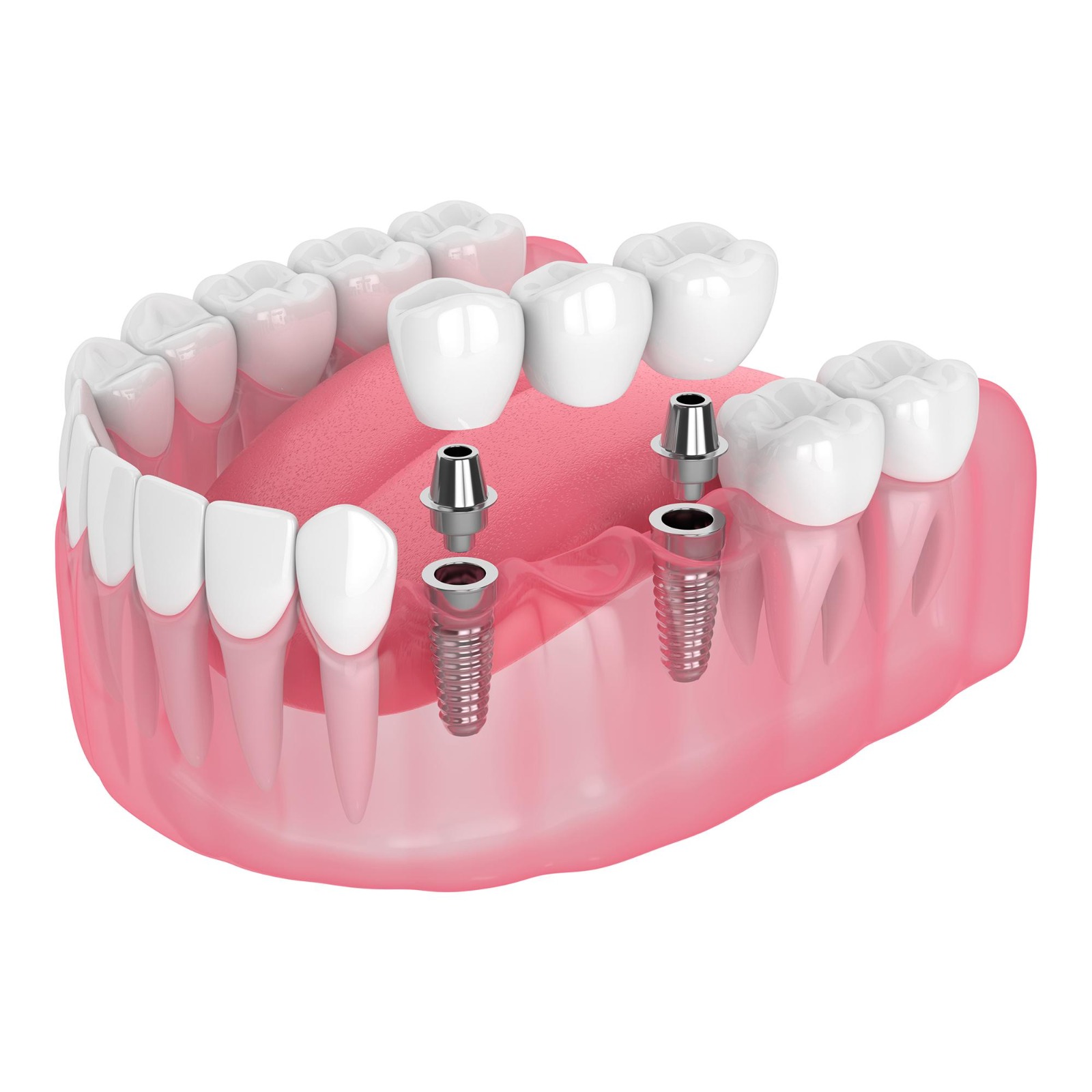
02
Implant-supported bridges can replace multiple missing teeth, helping restore appearance and chewing function.
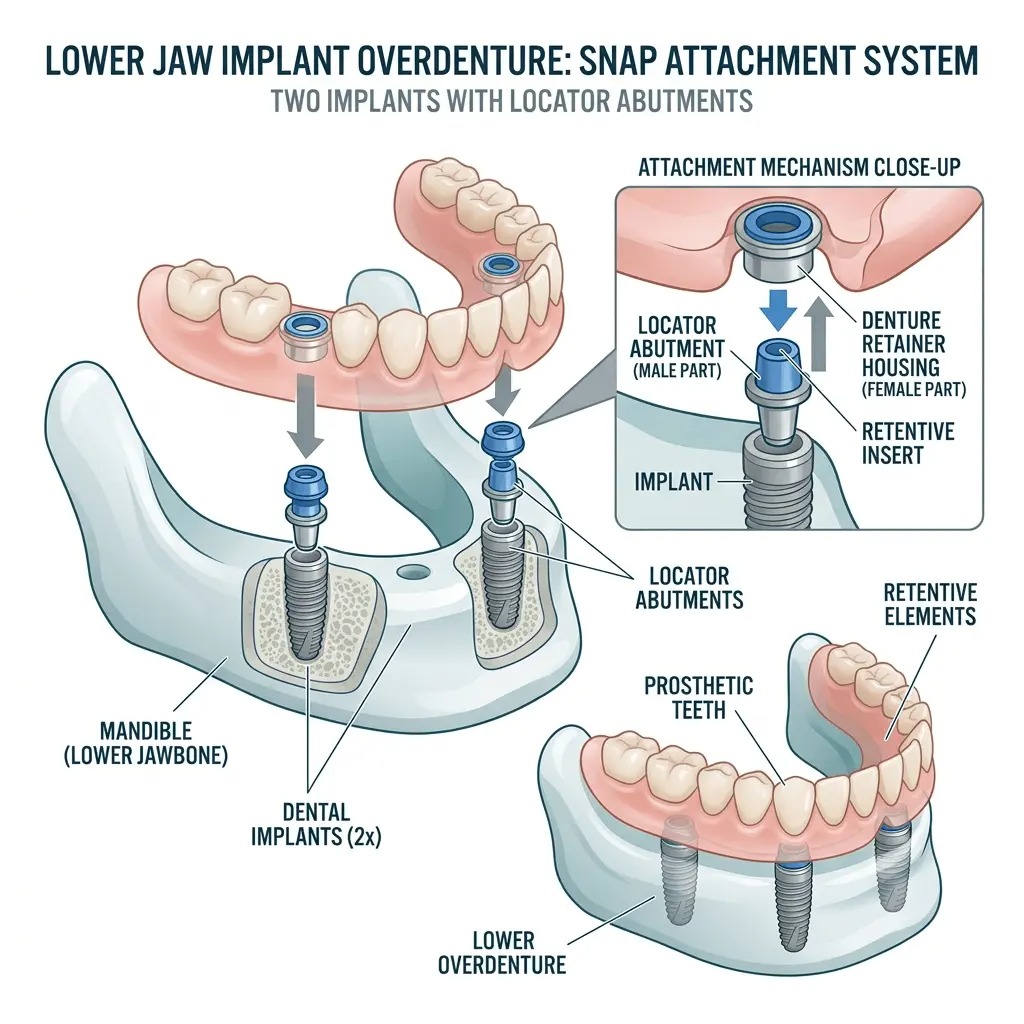
03
Implant-retained dentures may provide improved stability, making everyday activities such as eating and speaking more comfortable.
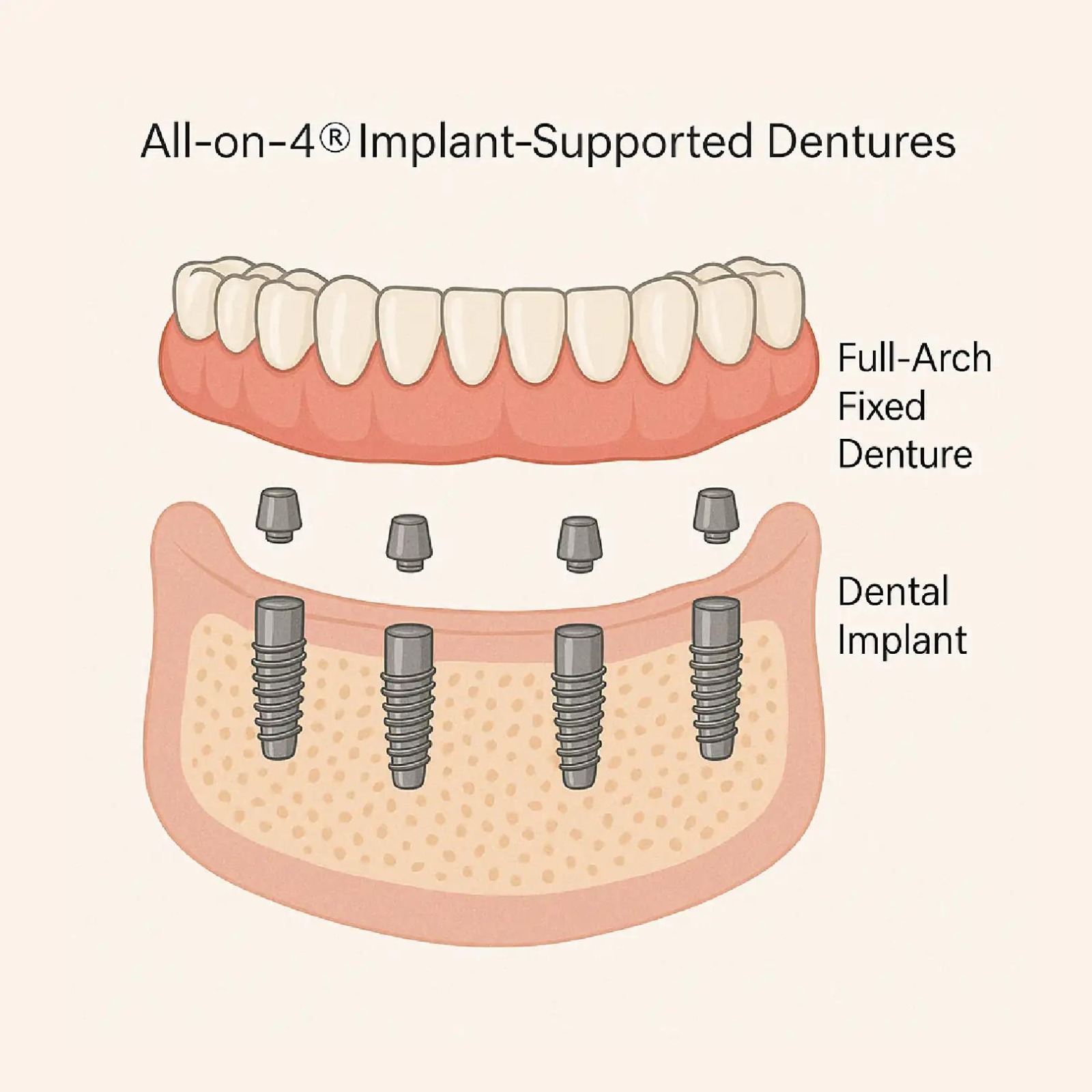
04
For suitable patients, a fixed implant-supported bridge may be an option to replace a full arch of missing teeth.
Book a consultation at Beautiful Dental Smiles to discuss your needs and explore suitable treatment options.
Losing a tooth can affect your confidence, the way you eat and the health of your remaining teeth. Dental implants are designed to replace missing tooth roots and support restorations that look and function much like natural teeth.
Implant crowns can be carefully matched to the shape and colour of your natural teeth, helping create a harmonious smile.
Dental implants provide a stable foundation for replacement teeth, potentially making it easier to chew a wider variety of foods.
Unlike some conventional bridges, a single implant-supported crown usually avoids the need to reshape the teeth on either side of the gap.
Dental implants transfer chewing forces to the surrounding bone and can help maintain bone in the area of the implant, although some bone changes may still occur.
With suitable planning, good oral hygiene and regular professional maintenance, dental implants can function successfully for many years.
Every smile is different. The suitability and expected benefits of dental implants depend on your individual oral health and treatment needs. A clinical assessment can help determine which options may be appropriate for you.
Replacing missing teeth is a personal decision. We focus on your individual needs, careful treatment planning and the long-term health of your smile.
Dr Harginder Singh qualified in 1996 and brings extensive experience across general, cosmetic and restorative dentistry.
Dr Singh has undertaken further training in implant dentistry at the University of Warwick, alongside advanced cosmetic dentistry training in the United States.
Every patient is different. We consider your individual concerns, expectations, remaining teeth, gums and long-term oral health before discussing suitable options.
Understand the potential benefits, limitations and costs of your treatment options, so you can make a decision that feels right for you.
Find us at 18a Station Road, Solihull, near Touchwood Shopping Centre, for your dental implant consultation.
A simple, guided process from your first free consultation to your new, confident smile.
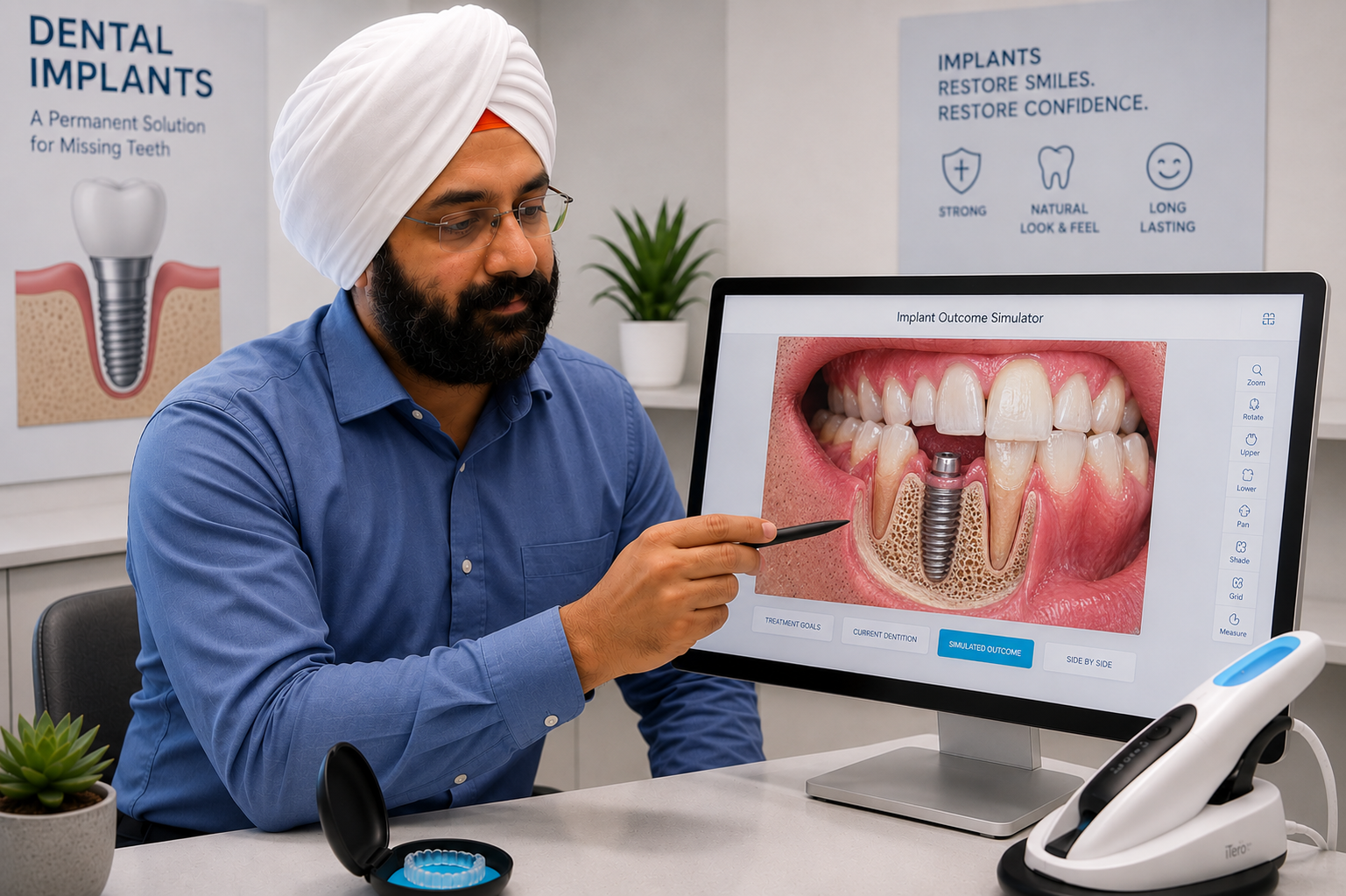
We listen to your concerns, discuss your missing teeth and explain the treatment options that may be suitable for you.
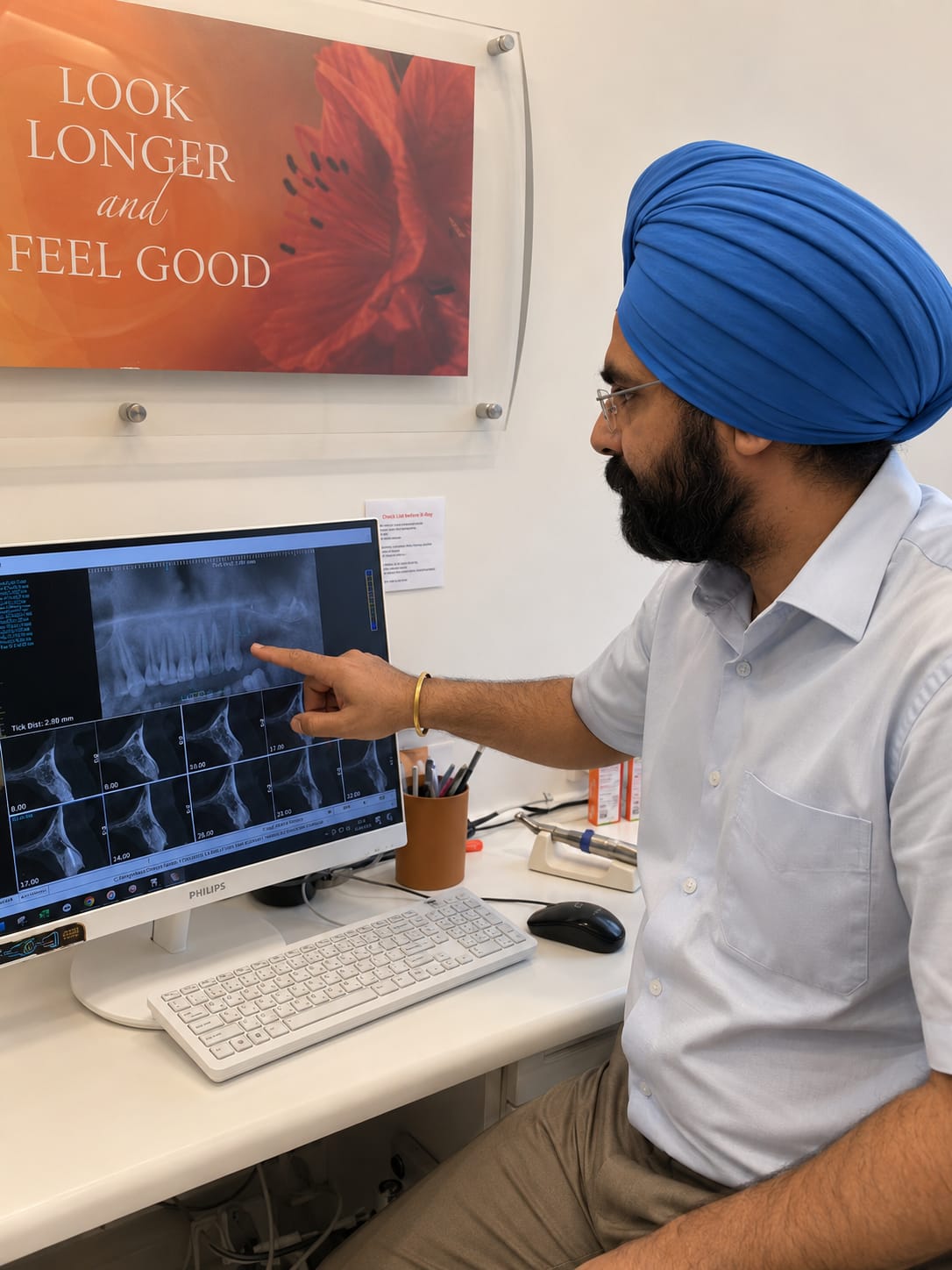
A full clinical assessment, including a CT scan if necessary, is performed. Advanced 3D digital planning software is used to develop your detailed treatment plan.
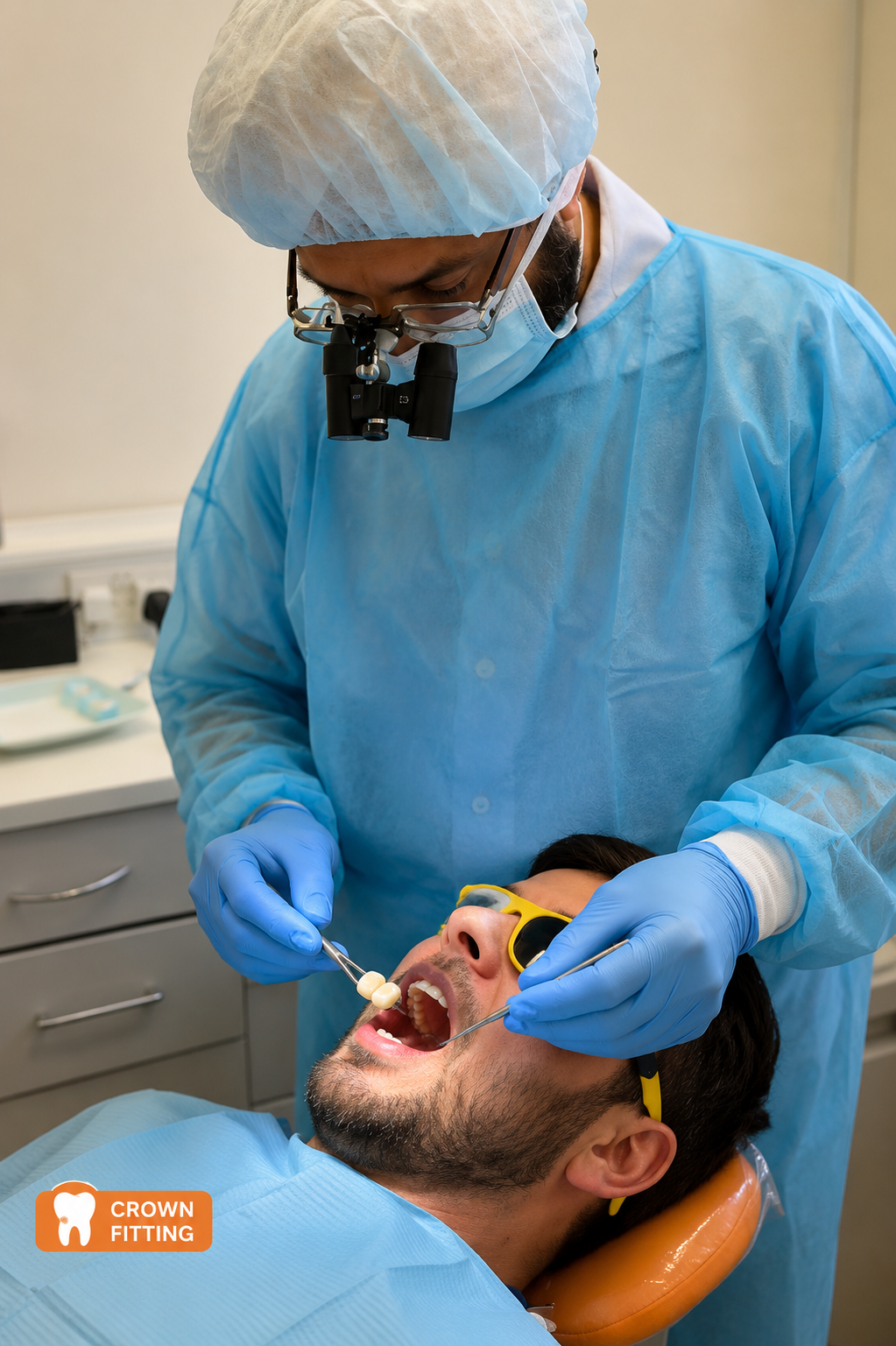
The implant is carefully placed into the jawbone under local anaesthetic. We explain what to expect and take steps to make your treatment as comfortable as possible.
We assess the gums and bite for your implant. We wait 3 months while the bone heals and secures around the implant, for long-term success.

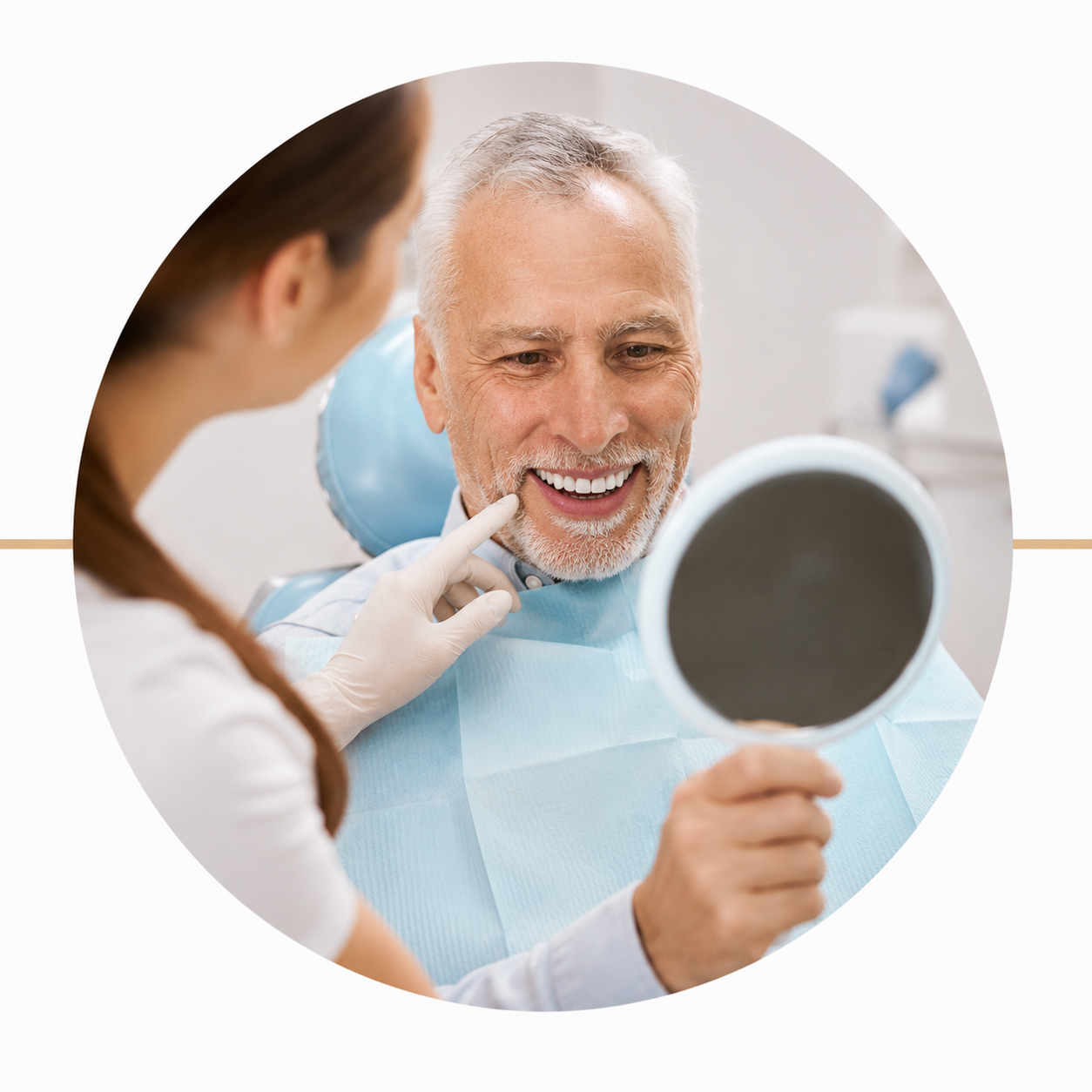
Enjoy your restored bite and confidence with a natural-looking smile, with ongoing aftercare.
Looking after your gums is an important part of planning for dental implants and maintaining your oral health over time.
Successful implant treatment depends on more than the implant itself. Healthy gums, adequate supporting bone and good oral hygiene are essential considerations for long-term implant health.
Assessing your gum health
If you have bleeding gums, gum disease or a history
of periodontal problems, we will assess these
carefully before recommending implants.
Periodontal treatment tailored to you
We offer comprehensive gum assessments and
periodontal treatment, including laser-assisted
care where clinically appropriate.
Protecting your long-term oral health
Our priority is to help you achieve a healthy
foundation for your replacement teeth and understand
how to maintain it.
A selection of real dental implant results from Beautiful Dental Smiles patients in Solihull.
Implant →
Implant →
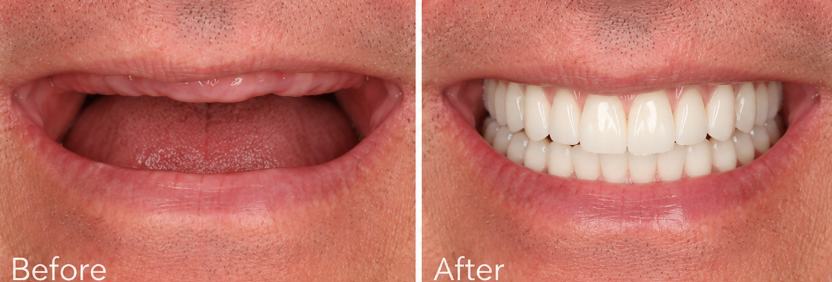
Implant →
Personalised implant care focused on restoring comfort, function and confidence in your smile.
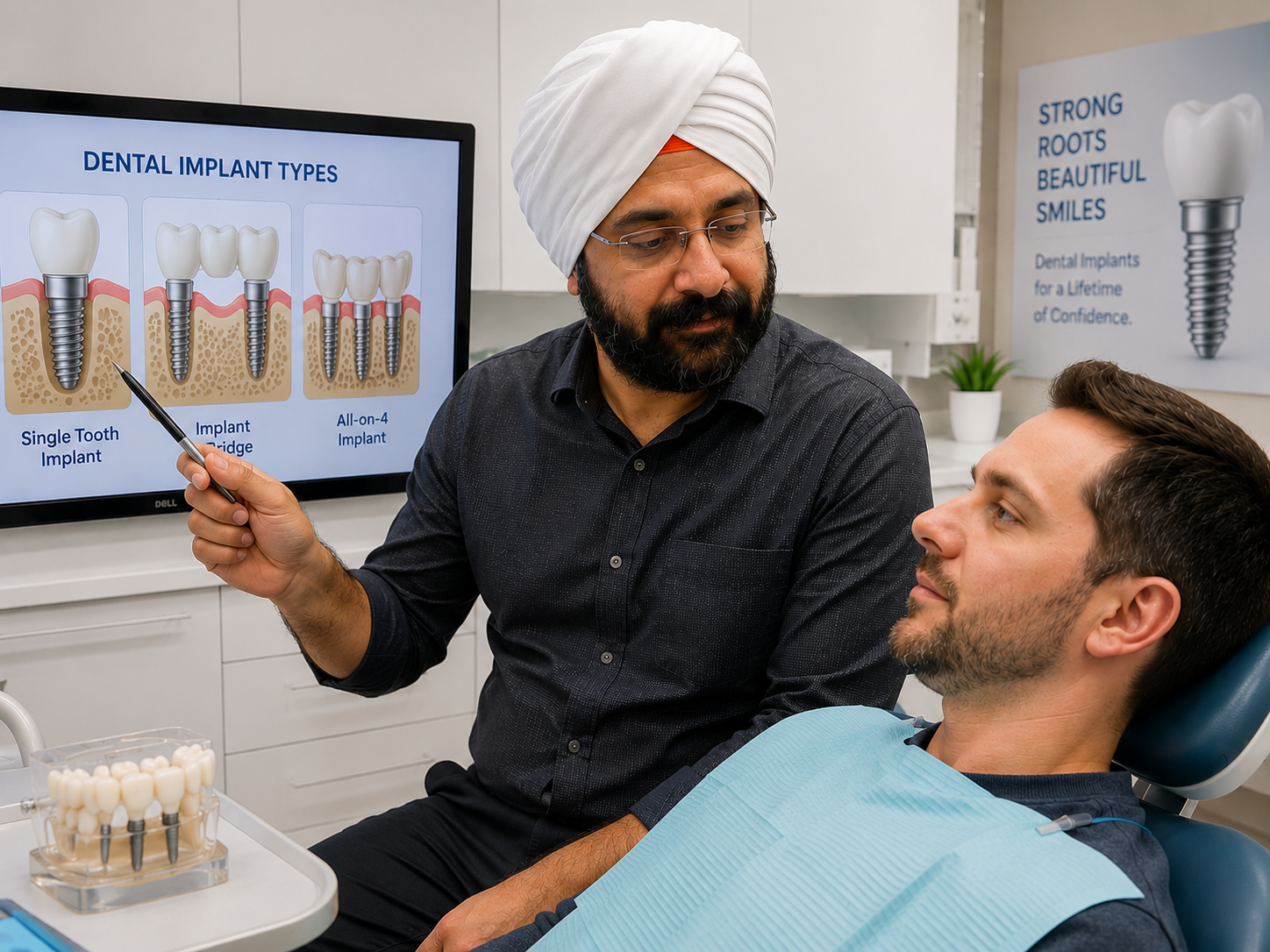
Dr Harginder Singh believes that replacing missing teeth should be about more than improving appearance. Your new teeth should feel comfortable, function well and complement the health of your remaining teeth and gums.
Having qualified in 1996, Dr Singh has 30 years of dental experience. He has undertaken further training in implant dentistry at the University of Warwick and advanced cosmetic dentistry training in the United States.
His approach combines careful clinical assessment with an understanding of each patient's individual concerns, expectations and long-term oral health.
Whether you are considering a single implant or replacing several missing teeth, Dr Singh takes time to explain the suitable options, benefits, limitations and costs so you can make an informed decision.
When someone comes to me with missing teeth, I want to understand how it is affecting their everyday life. For some patients, it is about being able to eat comfortably again. For others, it is about smiling without feeling self-conscious.
My aim is to recommend treatment that is right for the individual, with careful attention to their gums, bite and long-term dental health. I believe patients should understand all their options before making a decision.
Hear directly from patients about their treatment experience and the difference it made to their smile.
A dental implant is a small, usually titanium, fixture placed into the jawbone to support a replacement tooth or teeth. Once integrated with the bone, it can support a crown, bridge or denture, helping restore appearance and chewing function.
Implant placement is normally performed under local anaesthetic, so you should not feel sharp pain during the procedure. Some soreness, swelling or bruising afterwards is common and can usually be managed with appropriate pain relief and aftercare. We explain the procedure beforehand and take particular care with nervous patients.
The treatment time depends on your oral health, bone condition and the number of implants required. After placement, implants commonly need several months to integrate with the jawbone before the final restoration is fitted. Some cases can be restored sooner, while others require additional healing or bone grafting.
Dental implants can last for many years, and some remain functional for decades. However, they are not guaranteed to last a lifetime. Their longevity depends on factors including gum health, oral hygiene, smoking, medical conditions, bite forces and regular maintenance. The crown or other restoration may need repair or replacement over time.
Possibly, but active gum disease should normally be treated and stabilised before implant placement. A history of periodontitis can increase the risk of complications around implants. We assess your gum health and recommend appropriate treatment and maintenance before deciding whether implants are suitable.
In some cases, bone grafting or other techniques may make implant treatment possible. We assess the available bone using appropriate imaging and explain whether additional treatment is required. Not every patient is suitable for implants.
Yes. Dental implants can support individual crowns, bridges or implant-retained dentures. You do not necessarily need one implant for every missing tooth. The number and position of implants depend on your anatomy, bite and proposed restoration.
Conventional removable dentures rest on the gums and may sometimes move during eating or speaking. Dental implants are anchored in the jawbone and can support fixed replacement teeth or provide additional retention for removable dentures. Each option has different costs, maintenance requirements and clinical considerations.
The cost depends on the number of implants, the type of restoration and whether additional procedures, such as bone grafting, are required. Following your assessment, we will explain the recommended treatment, available alternatives and provide a written breakdown of costs before you decide whether to proceed.
Dental implants require daily cleaning, careful attention around the gumline and regular dental and hygiene appointments. Depending on your restoration, special brushes, interdental aids or other cleaning devices may be recommended. Although implants cannot develop tooth decay, the surrounding tissues can become inflamed or diseased without appropriate care.
Are you looking to replace missing teeth or secure loose dentures with implants to provide you with a stable, comfortable dental implant solution?
Do you want a solution that helps you get the bite you had before you lost your tooth?
Implants are an alternative to traditional solutions such as bridges or dentures . They can provide a stable foundation while avoiding the need to work on neighbouring teeth in the same way as some traditional options.
Losing a tooth can affect more than your smile. Gaps can make chewing uncomfortable and may make some of your favourite foods difficult to enjoy. Dental implants can help restore your ability to chew comfortably and enjoy food with greater confidence.
As soon as a tooth is lost, the balance in your entire dental structure is disturbed. The created gap allows for the remaining teeth (especially the ones nearest to the gap) to tilt and shift as a result of even the most normal regular chewing.
This could lead to further oral problems down the line, especially if the distorted structure of the teeth interferes with the patient’s chewing abilities. It isn’t uncommon to see someone lose multiple teeth over the years as a result of this and more often than not, the bone loss occurs in the same row, side by side.
A dental crown with the best dental implant to support it can dramatically change the life of someone
Start your dental implant journey with our exclusive limited-time offer and save £525 on your treatment. Available for the first 10 patients.